TCC GD-PI-WAT Journey
Admissions : To be announced in September 2026

presents
The Management Development Programme (MDP)
TCC’s Legendary GD-PI-WAT Training
The Intellectual Finishing School
Where Ordinary Ends and Extraordinary Begins
Customisation & Personalisation
Unique, Unmatched & Beyond Comparison
- Onset Evaluation
- Written Ability Test
- Individual feedback
- Personal Interview
- Individual feedback & playback
- Analysis of academic, professional, extracurricular, work and general facets
- Absolute benchmarking
- Relative benchmarking
- One-to-One Planning
- Personalisation at its best
- Customisation at its best
- Conducted, individually, for every student
- Customisation of 'Plan of Action' for every student
- In accordance with the background, competence, interests, and aspirations of the particular student
- Getting ‘Future Ready’

- Research & Development
- Customisation of 'Research Projects’ for every student
- In accordance with the background, competence, interests, and aspirations of the particular student
- Extensive Research
- Project Report Development
- Submission, Analysis, Feedback for every student
- One-to-One Evaluation & Feedback
- Once more, Personalisation at its best
- Once more, Customisation at its best
- For Communication Sessions
- For Psychometric Testing
- For Group Discussions, Group Activity, Group Exercise, Group Task
- For Personal Interviews
- For Group Interview
- For Written Ability Tests (WATs)
- For Forms, SOP, LOR, CV, Visume
- For Business School selection
A 360-degree quest manifests in personalised & customised
evaluation, analysis, benchmarking, feedback, and planning.
Hard Skills
Conceptual Phase
- Form-Filling Concepts
- Frequently Asked Questions
- Customised Questions
- Academic, Professional, Extracurricular, Work, and General facets
- Resume / Curriculum Vitae (CV)
- Statement of Purpose (SOP)
- Letter of Recommendation (LOR)
- Essay Writing Concepts / Written Ability Test (WAT) Concepts
- Topic Interpretation
- Thought Organisation
- Template Structuring
- ‘Lead-in’ Strategy
- Essay-language mode
- General Knowledge Concepts
- General
- Particular
- Case Study Concepts
- Fundamentals of Case Analysis
- Methodology
- SWOT analysis
- Macro analysis
- Micro analysis
- Innovation
- Solution
- Management Concepts
- Fundamentals
- Basic Elements
- Planning
- Organising
- Leading
- Controlling
- Staffing
- Staff Functions
- Line Functions
- Functional Areas
Domain Knowledge & Technical Expertise
Hard Skills
Conceptual Phase
- Human Resource Concepts
- Personnel Management
- Human Resource Management
- Industrial Relations
- Human Resource Development
- Organisational Development
- Finance Concepts
- Accounting Concepts
- Books of Accounts
- Depreciation, Inventory
- Working Capital
- Capital Budgeting
- Cash Flow, Fund Flow
- Ratio Analysis
- Economics Concepts
- Fundamentals
- Microeconomics
- Macroeconomics
- Marketing Concepts
- The Paradigm Shifts, The Trends
- Fundamentals
- The Process of Marketing
- Marketing Research
- Customer-driven Engineering
- Distribution
- Promotion
- Selling
- Customer Support
- Services
- Segmenting, Targeting, Positioning
- Leadership Concepts
- Initiative
- Planning
- Decision Making
- Problem Solving
- Time Management
- Activity Management
- People Management
Domain Knowledge & Technical Expertise
Soft Skills
Conceptual Phase
- Communication Concepts
- Verbal
- Presentation Skills
- Oratory skills
- Verbal ability
- Lexical cognisance
- Ratiocinative skills
- Speech edifice
- Non-verbal
- Communication sans words
- Body Language, Eye Contact, and Listening
- Mannerisms and Expressions
- Personality, Attitude, and Behaviour
- Esprit-de-corps
- Leadership qualities
- Decision making
- Problem solving
- Alacrity
- Kinesics
- Public Speaking / Extempore Concepts
- Public Speaking techniques
- Extempore techniques
- General topics
- Abstract topics
- Interpretation Strategy
- Implementation Strategy
- Parlance Strategy
- Managing Glossophobia
- Group Discussion Concepts
- The Essence of a GD
- GD - a Science and an Art
- Fundamentals
- Testing Grounds
- Initiation and Innovation
- Content
- Verbal Communication
- Non-verbal Communication
- Group Behaviour
- Concluding
- Summarising - Verbal
- Summarising - Written
Attitudinal & Behavioural Competencies
Soft Skills
Conceptual Phase
- Group Activity / Group Exercise / Group Task Concepts
- Fundamentals
- Testing Grounds
- Myriad Possibilities
- Group Chemistry
- Group Interview Concepts
- Fundamentals
- Testing Grounds
- Many-to-Many Mapping
- Handling the Aberration
- Marginal Features
- Focus Areas

- Personal Interview Concepts
- The Essence of an Interview
- Interview - a Science and an Art
- Fundamentals
- Testing Grounds
- The Process
- Self Knowledge
- Self Awareness
- Past Knowledge
- Future Knowledge
- Incidental Knowledge
- Handling of Frequently Asked Questions
- Handling of Tricky Questions
- Handling of Tricky Situations
- Questions to ponder on
- Strategising Interviews
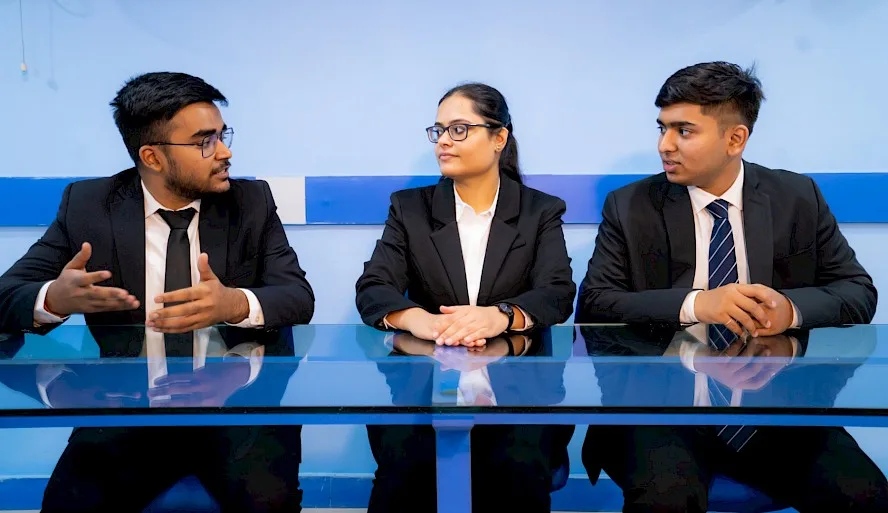
Attitudinal & Behavioural Competencies
Applications
Practical Phase
- Communication Sessions
- 6 sessions per student
- Participation in Public speaking
- Participation in Extempore
- Participation in Presentation
- Participation in Debate
- Participation in Creative Writing
- Diverse Topics
- Diverse Situations
- Presentation Skills
- Oratory Skills
- Performance Attitude
- Stage Kinesics
- Individual evaluation, analysis, and feedback
- Essay Writing / Written Ability Test (WAT)
- 10 sessions per student
- Sessions covering myriad topics
- Individual evaluation, analysis, and feedback
- Topic feedback
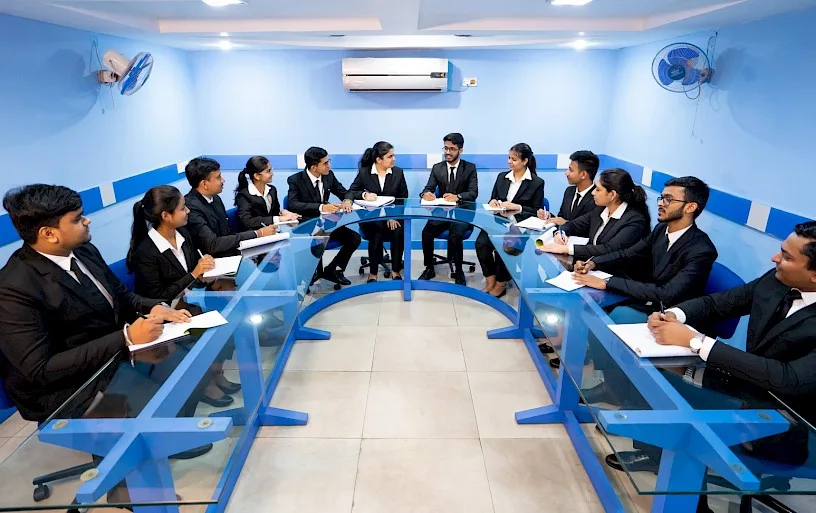
- Psychometric Testing
- 2 sessions per student
- Word Relationship Test
- Situational Relationship Test
- Thematic Apperception Test
- Thought-buster Session
- Mind Mapping
- Individual evaluation, analysis, and feedback
- Form Filling
- Business School forms
- Resume / Curriculum Vitae (CV)
- Statement of Purpose (SOP)
- Letter of Recommendation (LOR)
- Individual evaluation, analysis, and feedback
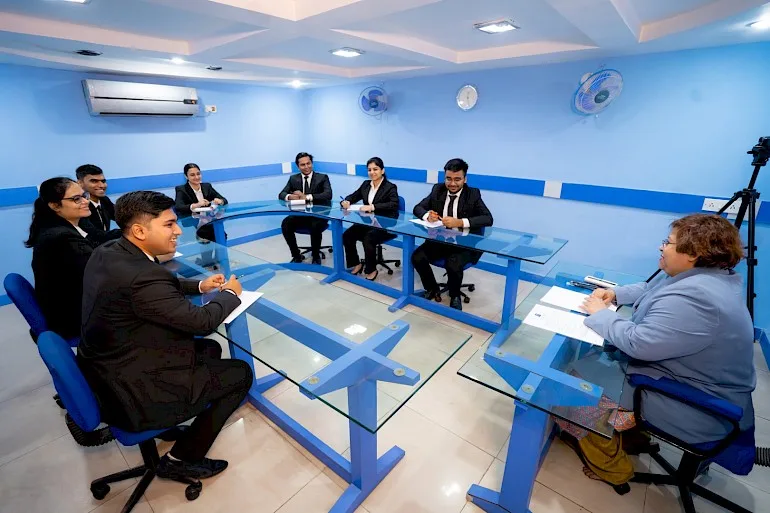
Concepts + Practical + Brainstorming = Crystal Clear Concepts
Applications
Practical Phase
- Group Discussions
- 7 sessions per student
- Sessions covering myriad topics
- Social, Political, Economic issues
- Abstract Scenarios
- Case Studies
- Audio-visual Sessions
- Group Activities
- Group Exercises
- Group Tasks
- Individual evaluation, analysis, and feedback
- Topic feedback
- Group Interview
- 1 session per student
- Evaluation of Hard Skills and Soft Skills in a group setup
- Individual evaluation, analysis, and feedback
- Absolute Benchmarking
- Relative Benchmarking
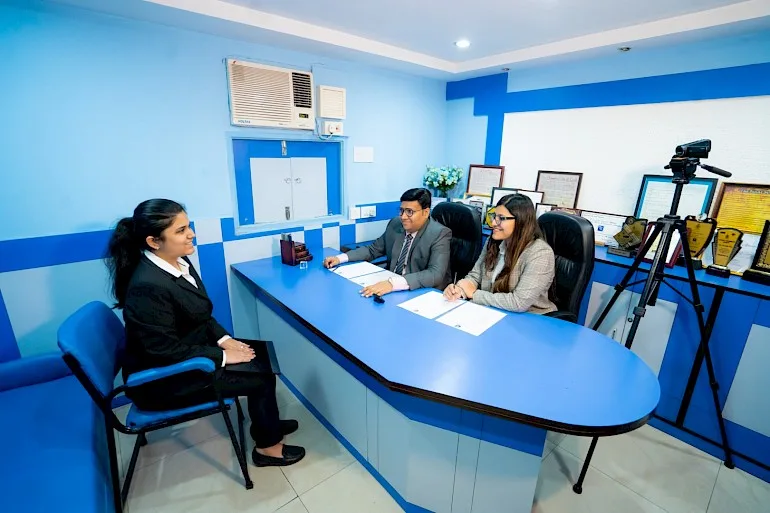
- Personal Interviews
- 6 sessions per student
- Covering the entire spectrum
- Evaluation of Hard Skills
- Evaluation of Soft Skills
- Academic facets
- Professional facets
- Extra-curricular facets
- Work facets
- General facets
- Panellists -
- Corporate recruiters
- Campus recruiters
- HR managers
- Functional experts
- Alumni from top business schools including IIMs and XLRI
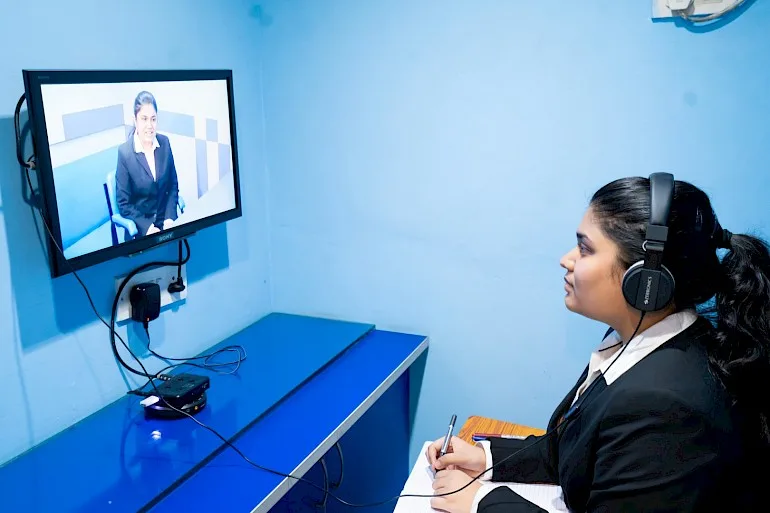
- Interviews to be video recorded
- Evaluation, Analysis, Feedback, and Playback of the interviews
Concepts + Practical + Brainstorming = Crystal Clear Concepts
Evaluation Components
Business Schools' Expectations
- Essay Writing / Written Ability Test (WAT)
- A test of topic interpretation, thought organisation, language, presentation, and written communication skills.
- Extempore
- A test of alacrity, topic interpretation, thought organisation, language, presentation, ratiocination, verbal and non-verbal communication skills.
- Psychometric Testing
- A test of a candidate's attitude, consistency, and emotional quotient.
- Group Discussion (GD)
- A topic-based discussion amongst a number of participants evaluating knowledge, skills, and attitude. A test of initiative, innovation, group behaviour, verbal and non-verbal communication skills.
- Group Activity / Group Exercise / Group Task
- An activity undertaken by a group of candidates towards an objective – explicit or otherwise. A test of initiative, innovation, alacrity, and group behaviour.
- Case Study / Case Discussion (CD)
- A social / political / business / abstract situation analysed by candidates in a group discussion set-up. Test of problem solving skills on the face of uncertainty, ambiguity, and information constraint.
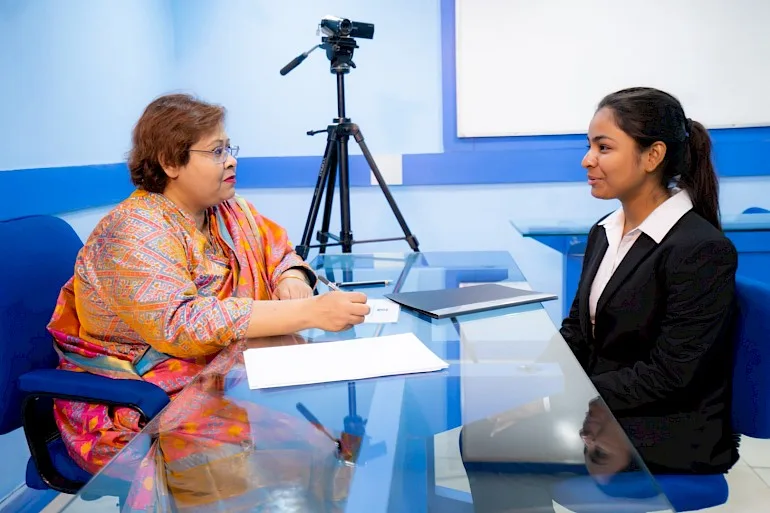
- Personal Interview (PI)
- A one-to-one or a many-to-one set-up. A panel comprising one or more members evaluate(s) the candidate's Hard and Soft skills. A test of Academic, Professional, Extracurricular, and Work-related competence. A veritable 360-degree appraisal.
- Group Interview (GI)
- A one-to-many or a many-to-many set-up. A panel comprising one or more members evaluate(s) multiple candidates in tandem. A test of Hard and Soft skills in a group set-up.
A cerebral, personalised, customised, conceptualised, theoretical, and practical training
will ensure surmounting the seemingly insurmountable barriers.
TRANSCENDENT ACHIEVEMENTS
GD-PI-WAT Results : Monumental
● Best results in the country, by a long margin, since 2001 (inception).
● Also, since 2004-05
- IIM(s) call-conversion has been above 90 %
- XLRI call-conversion has been above 80 %
- Overall call-conversion (all business schools included) has been above 90 %
Career Results : Matchless
Thanks to The TCC Journey (CAT and GD-PI-WAT trainings),
- Till date more than 200 TCC students have got the best placement in their respective business school.
- TCC students have got the best all India placements, all business schools combined, for 4 consecutive years.
- No other institute in the entire country has been able to match this feat.
End of a hypothetical argument.
(A real one has ceased to exist long back.)